Little Chef SVG Cut File for Kids: Graphics & T-Shirt Designs
A Brand Designer’s First Impression—Playful, Warm, and Instantly Recognizable
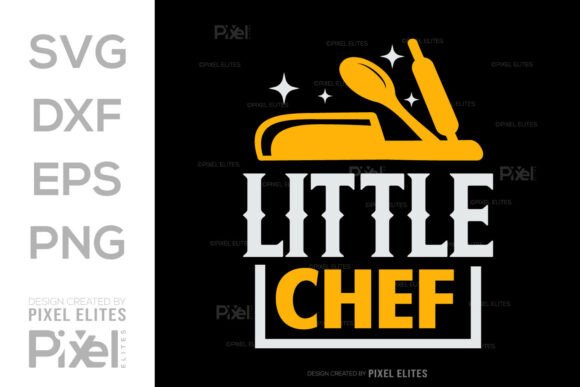
When I opened the Little Chef SVG Cut File for Kids, my immediate reaction was relief—this isn’t another over-rendered, overly saturated clipart piece. It’s clean, well-proportioned, and carries a gentle hand-drawn charm without sacrificing vector precision. The design features a smiling child chef with a tilted toque, whisk in hand, and subtle kitchen motifs (a tiny pot, steam swirl, or checkered apron detail depending on the version). It reads as friendly, approachable, and authentically handmade—not corporate, not sterile, not overly cutesy. That makes it ideal for local businesses that want warmth without whimsy overload: think a neighborhood bakery launching a “Kids’ Baking Club,” a handmade soap brand adding a “Mini Mixologist” line for children’s bath sets, or a family-run cooking school creating branded aprons and recipe cards.
Where This Graphic Design Asset Earns Its Place in Real Local Business Branding
In my recent work with “Hearth & Whisk,” a small-batch kitchen goods boutique in Portland, we used the Little Chef SVG Cut File for Kids across six touchpoints—and each time, it strengthened visual cohesion. We applied it to:
- Product labels for mini cookie cutters and kids’ baking kits—scaled down but still legible at 1.25” height;
- Packaging accents on kraft mailer boxes, where its outline-style SVG rendered crisply in foil-stamp mockups;
- Thank-you cards tucked into orders, paired with a warm serif font to balance its playful energy;
- Social media graphics for Instagram Reels showing “behind-the-scenes” prep with real kids (the SVG added consistent branding without distracting from faces);
- Seasonal campaign visuals for a “Back-to-Kitchen” August launch—used as a repeating border element on digital banners and printable event posters;
- Product mockups for Etsy and local market listings, where its clean lines held up beautifully on mugs, canvas totes, and cotton aprons.
How It Elevates Small Business Presentation—Beyond Decoration
This isn’t just clipart—it’s a functional piece of brand identity infrastructure. When applied thoughtfully, the Little Chef SVG Cut File for Kids delivers measurable business value: it creates a stronger first impression on crowded farmers’ market tables; improves product recognition across diverse SKUs; supports clearer visual hierarchy by anchoring key messaging (e.g., “For Little Hands” placed beside the chef); reinforces consistent brand identity across digital and physical assets; and builds customer trust through polished, intentional design—not generic stock filler. For handmade businesses especially, that consistency signals professionalism without sacrificing personality.
Best Use Cases for Maximum Impact
The Little Chef SVG Cut File for Kids shines brightest where warmth and clarity matter most:
- Hero graphics on product landing pages or shop banners;
- Decorative brand elements on packaging tape, tissue paper, or hang tags;
- Stickers for loyalty programs (“Earn Your Mini Chef Badge!”);
- Printable inserts inside kids’ activity kits or subscription boxes;
- Boutique visuals for window decals or shelf talkers in local retail partners;
- Social media campaign graphics—especially carousel posts explaining product use or values.
Where to Proceed With Intention
This asset isn’t universally flexible. Avoid placing it in contexts where clarity or restraint is non-negotiable: formal corporate branding (e.g., investor decks), very small labels under 0.75”, or crowded packaging layouts where it competes with ingredient lists or certifications. It also risks looking out of place against stark minimalist palettes or luxury positioning—skip it for black-and-gold candle branding or ultra-sleek skincare. And never drop it onto low-contrast backgrounds (e.g., light yellow on cream) without testing print legibility first.
Practical Brand Designer Notes—Test Before You Commit
Before rolling this into client work or your own small business branding, run these checks:
- Test on real packaging mockups—not just digital previews—using actual substrate samples (kraft paper, matte sticker vinyl, cotton fabric);
- Check black-and-white usage: Does the outline hold weight when printed in single-color? Does it disappear in fine detail?
- Preview at label scale: Render it at 0.8” and 1.5” on your intended material—some SVGs lose crispness in nested curves;
- Test with your brand colors: Does it harmonize with your primary palette—or clash with secondary tones?
- Compare against competitor packaging: Does it differentiate your offering or blend in?
- Review print quality on both home printers and commercial vendors—some SVGs contain hidden raster layers;
- Inspect PNG transparency: Is the background truly alpha-channel clean, or does it leave fringing?
- Verify vector editability: Can you adjust stroke weight, isolate elements, or recolor paths without breaking the file?
- Test alongside typography: Try it beside serif (e.g., Playfair Display), sans serif (e.g., Inter), script (e.g., Pacifico), handwritten (e.g., Qwitcher Grypen), and display fonts (e.g., Bangers)—does it complement or compete?
- Confirm commercial licensing: Ensure your license covers physical product sales, client deliverables, and social media graphics—not just personal use.
Final Thought: A Thoughtful Tool, Not a Shortcut
The Little Chef SVG Cut File for Kids is more than a digital product from a creative marketplace—it’s a versatile graphic design asset that earns its place when aligned with authentic brand voice and thoughtful execution. For local businesses building real connections—whether through a seasonal “Kids’ Cookie Decorating Day” at a coffee shop or a line of organic baby food pouches with illustrated storytelling—it adds heart without compromising polish. Used with intention, it becomes part of the packaging design, the marketing visuals, and ultimately, the quiet confidence of a brand that knows exactly who it serves—and how to welcome them, warmly and well.